Overview
The home renovation calculator was one of the tools created as part of a broader project to improve the renovation experience.
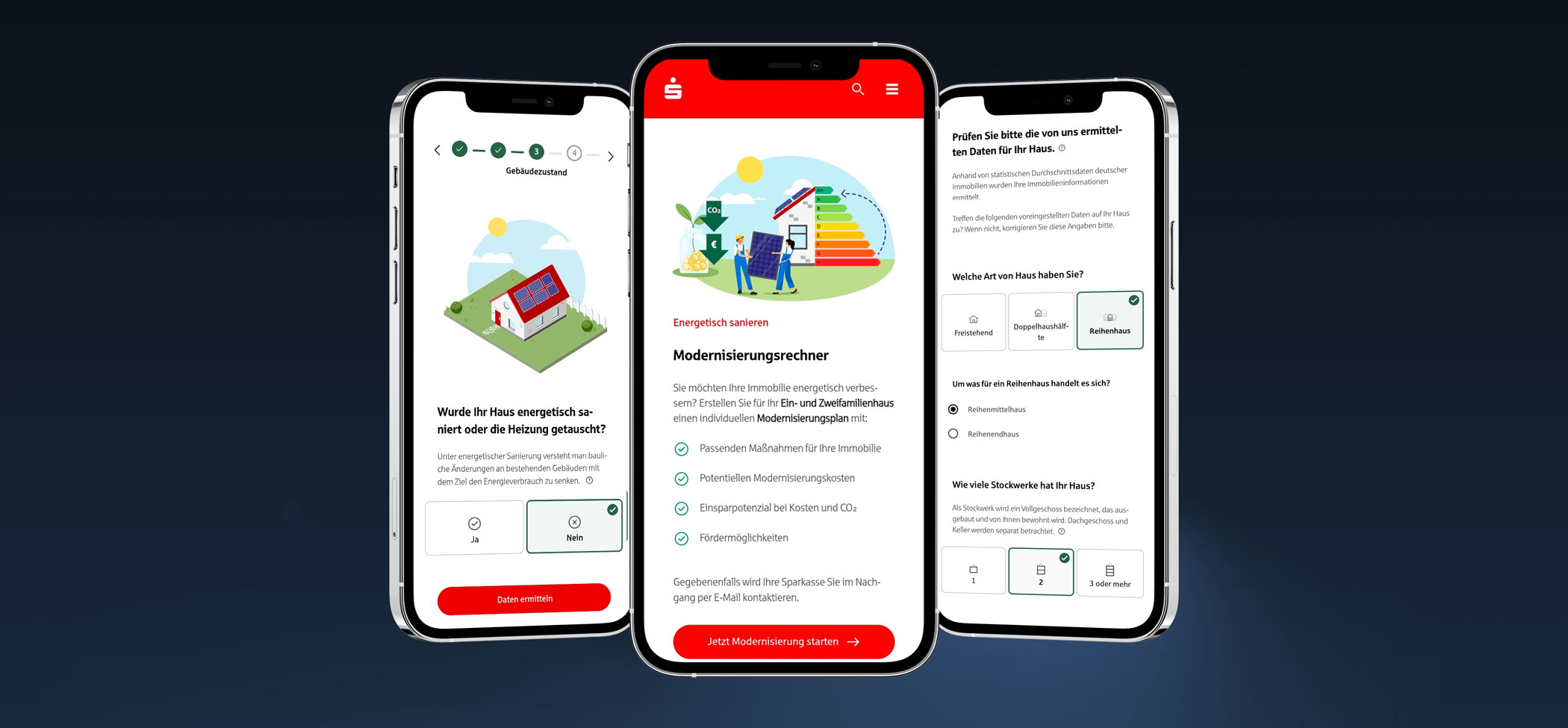
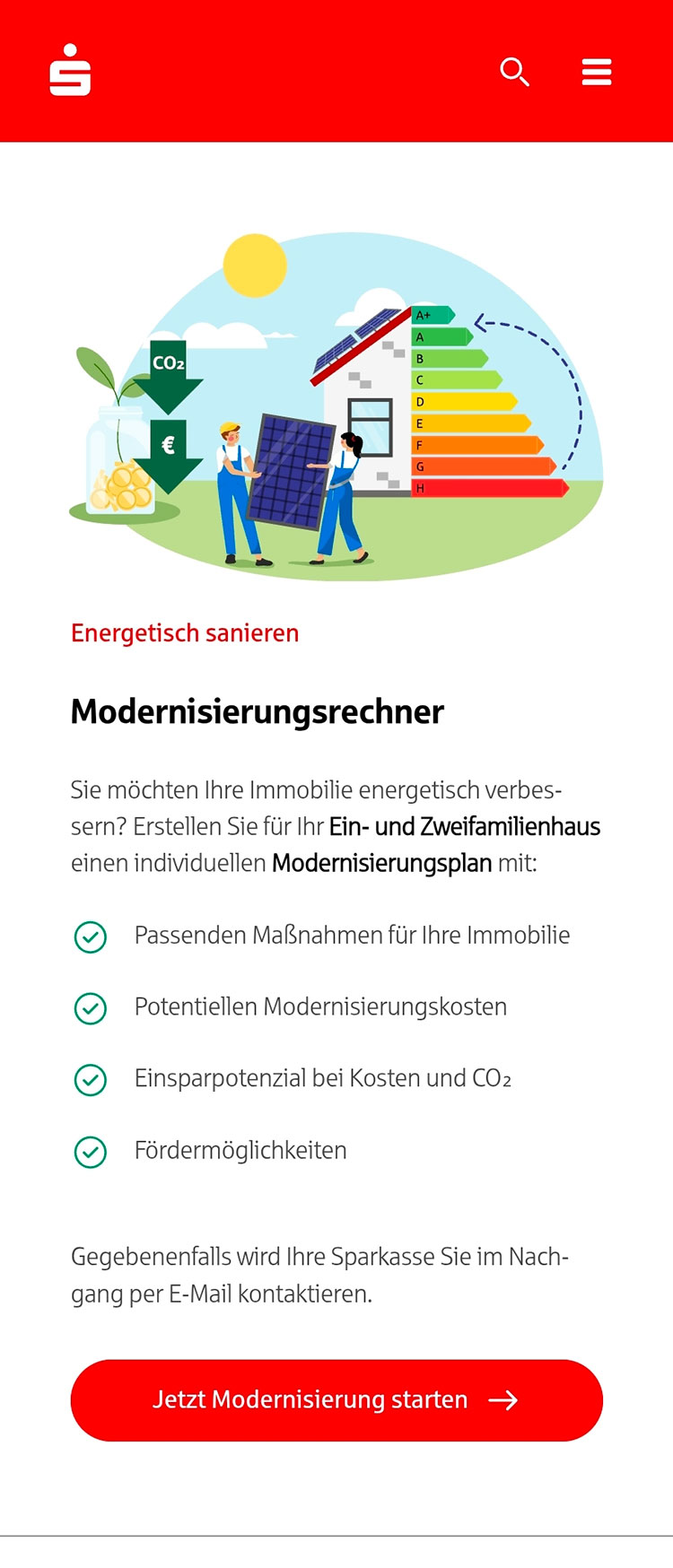
This calculator is a digital self-service tool that helps users navigate the complex process of energy-efficient renovation more easily. It guides users through relevant modernization options and shows estimated costs, savings potential, funding opportunities, and a personalized modernization plan at the end.
Explore the live productProblem
The existing tool could only provide a cost range for energy renovations (based on simple questions) rather than an exact estimate. At the same time, users needed more information and wanted to see how funding and financing options could reduce their expenses. Energy consultants, meanwhile, needed a tool that would save time by surfacing the key results they needed during consultations.
Project Goal
To provide users the information they needed about energy renovation through a tool and content that was easy to use and understand.
The tool needed to provide consultants with key information about properties requiring modernization. For Sparkasse, the objective was to strengthen the sales funnel by attracting more qualified leads.
Impact
Optimizing the product page and adding the renovation calculator increased engagement and user satisfaction.
Increase in traffic to the product page
Of users gave the tool a 5-star CSAT rating — content was useful and understandable
Increase in lead volume one year after MVP launch, with users submitting the contact form and downloading their renovation plan
My Role & Responsibilities
I contributed to optimizing the renovation experience, working across the full product lifecycle — from discovery and research to prototyping and handoff.
Experience Strategy & Discovery
Conducted expert interviews and competitive benchmarking. Mapped the current-state user journey across all touchpoints, then designed future-state journeys and user flows to simplify complex renovation processes.
End-to-End Experience Design
Designed and refined concepts from low-fidelity wireframes to high-fidelity and interactive prototypes ensuring a consistent experience across devices.
User Research & Interviews
Defined test hypotheses and questions with user researchers, prepared questionnaires, collaborated in moderated usability testing.
Agile Collaboration & Handoff
Collaborated across product, engineering and stakeholder teams within an agile sprint framework, ensuring design decisions stayed aligned with technical and business requirements.
Approach
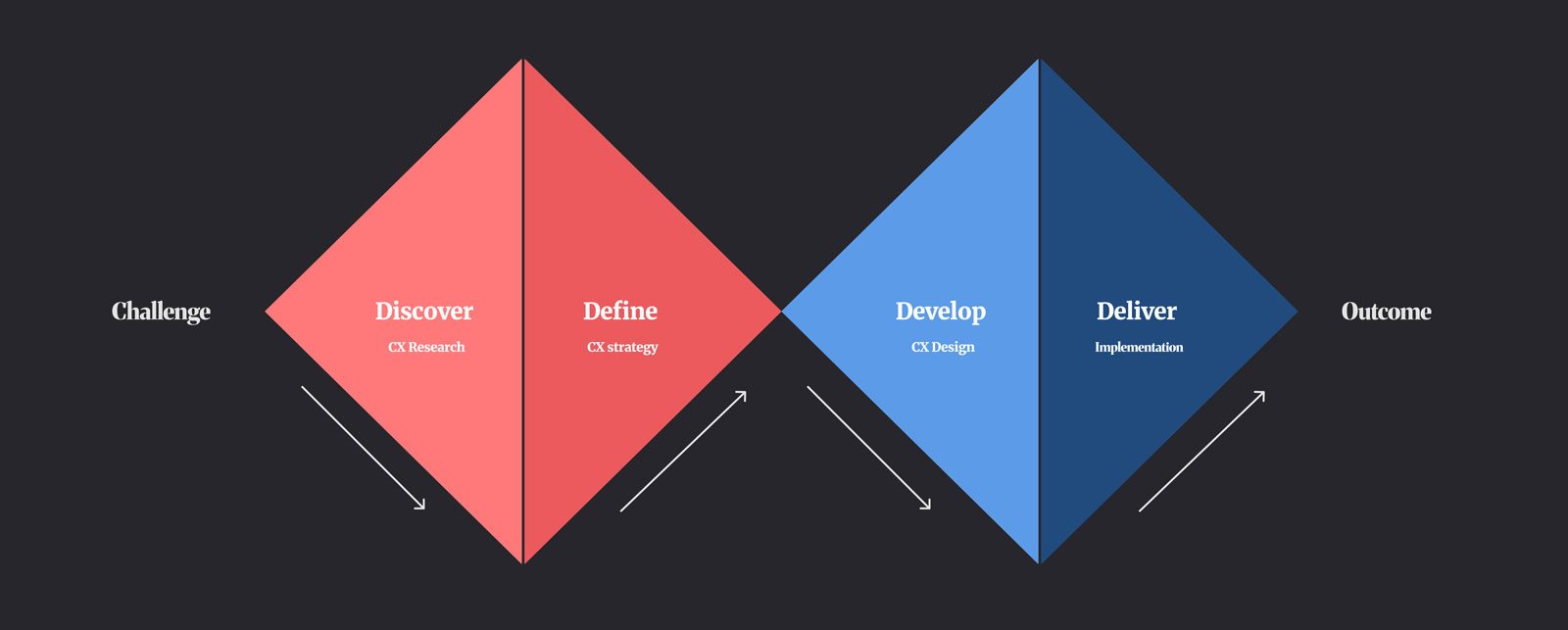
We used the Double Diamond approach, moving from discovering and defining the problem to developing and delivering the solution. Throughout all phases of the project, I worked closely with the team. Through daily stand-ups, weekly meetings and grooming sessions, we aligned on requirements, reviewed ongoing work, discussed open questions and refined solutions step by step.
Benchmarking & Competitor Analysis
I researched and analyzed the competitor tools and content.
Content & Tools Audit
Reviewed Sparkasse's existing renovation-related content and tools
Customer Journey Mapping
I mapped how homeowners currently experience the renovation process across all Sparkasse touchpoints, identifying friction points and moments of uncertainty in the current state.
Interviews with End-Users
Before making the concepts we interviewed homeowners and home buyers to understand their pains and needs.
Interviews with Sparkasse Consultants
We interviewed the Sparkasse consultants to understand the consultation process for energy renovation and the information they need during these consultations.
Expert Interviews
The renovation calculator was built on an external API (from an energy expert company). We held weekly meetings with them to review the concepts and calculation logic.
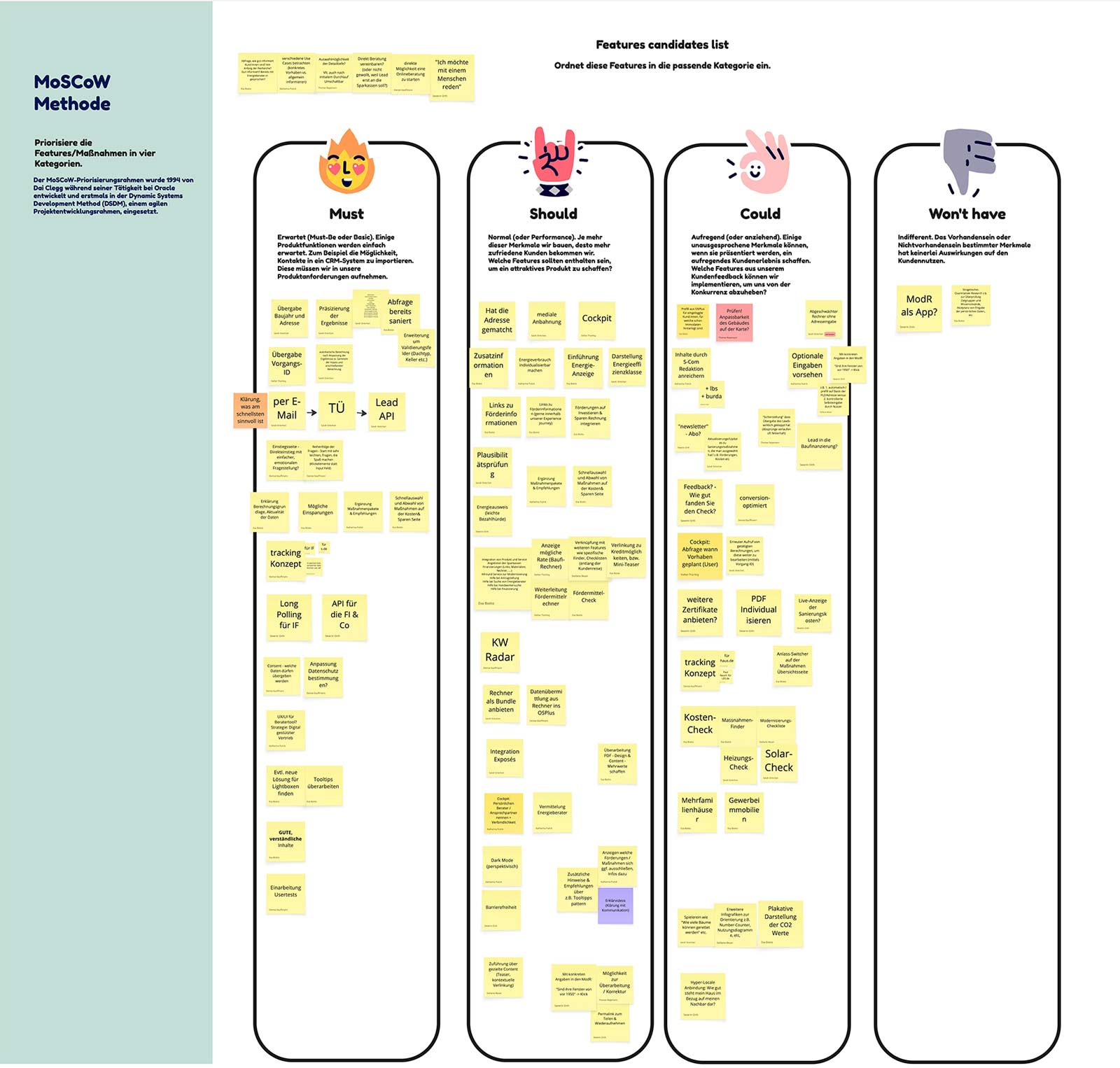
In the second phase, we analyzed the collected data to identify key user needs and pain points. We also worked closely with stakeholders to define the product vision.
→User Needs
- Understand what their home actually needs
- Get realistic cost estimates quickly
- Explore available financing and funding options
- Feel confident about their renovation decisions
- Know what steps to take next
→Key Pain Points
Unclear funding options
Full energy-efficient renovation costs €750–€1,600 per m², and while KfW loans and BAFA grants exist, homeowners don't know what they qualify for or how to access funding.
Savings uncertainty
Many struggle to judge which renovations will reduce costs and whether the investment will pay off.
Information overload
Homeowners feel overwhelmed by complexity, costs, and lack of clear guidance.
User Persona

Designing the solution
Customer Journey
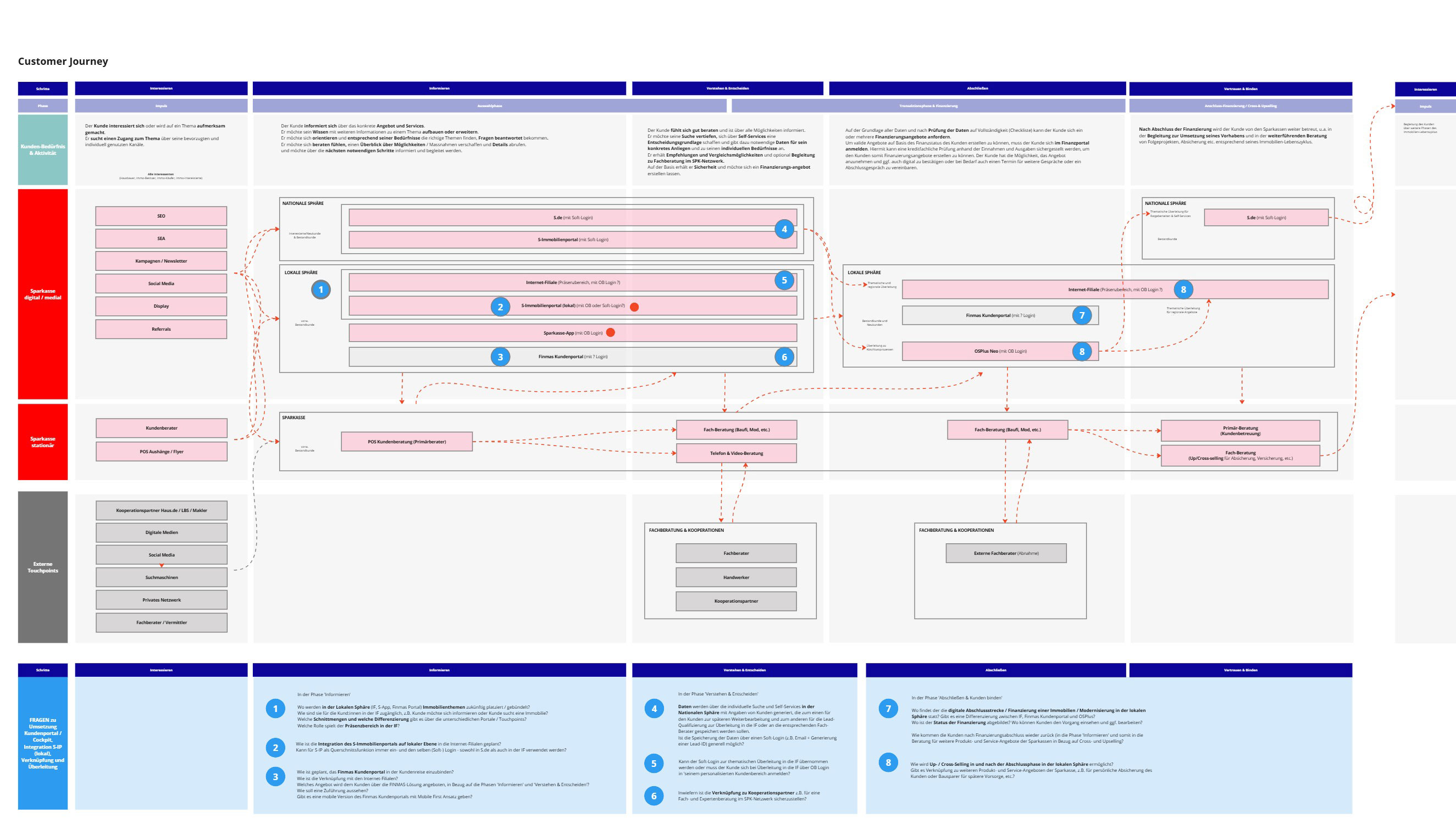
Based on our research and identified pain points, I designed the future-state journey. In collaboration with the content team, focus groups and energy experts, we optimized the flow and defined the final solutions.
User Flow
I mapped the user flow in detail and identified the questions users needed to answer along the way. After several feedback rounds with the team, energy consultants, and engineers, the flow was refined to make sure it aligns the user needs and business objectives.
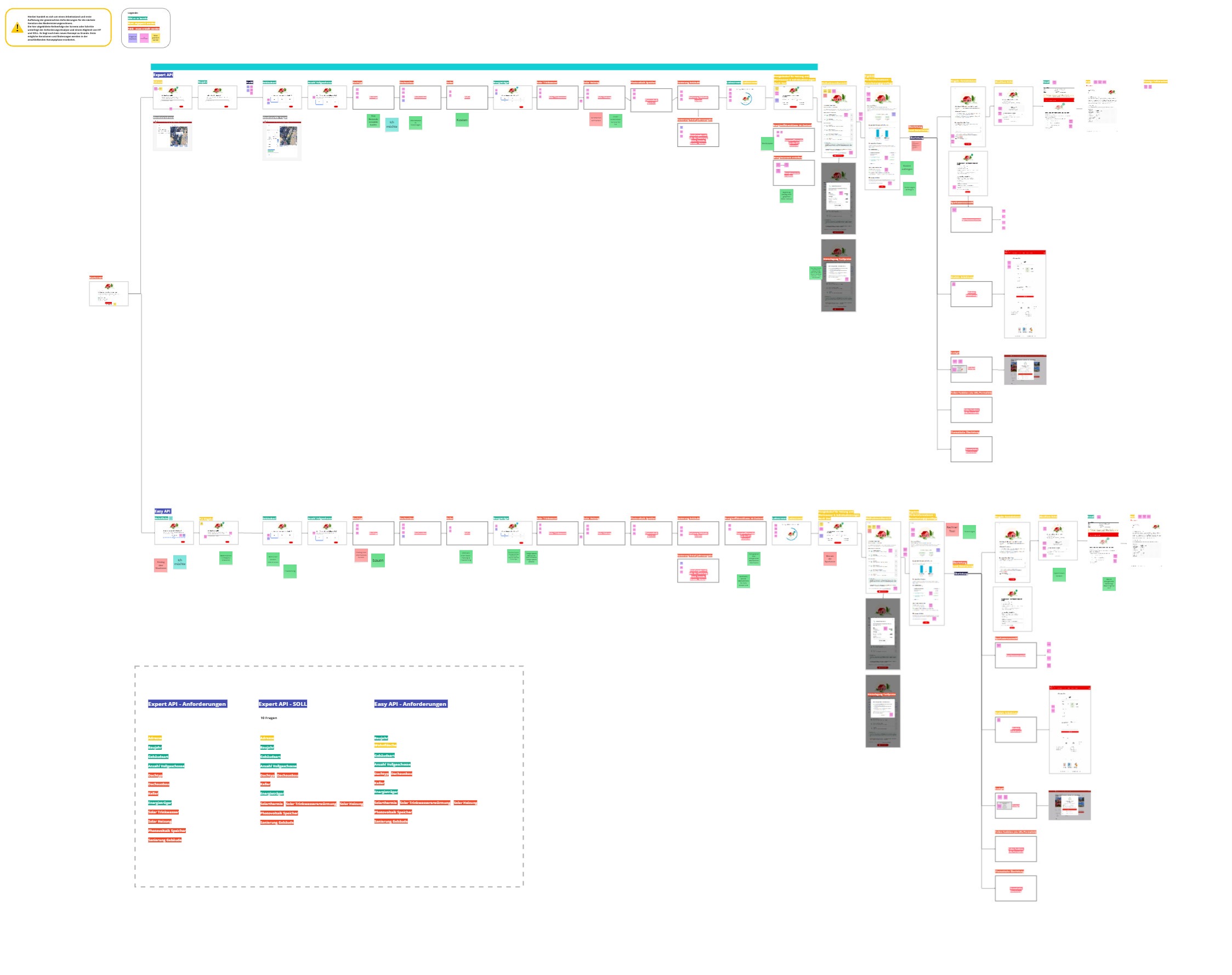
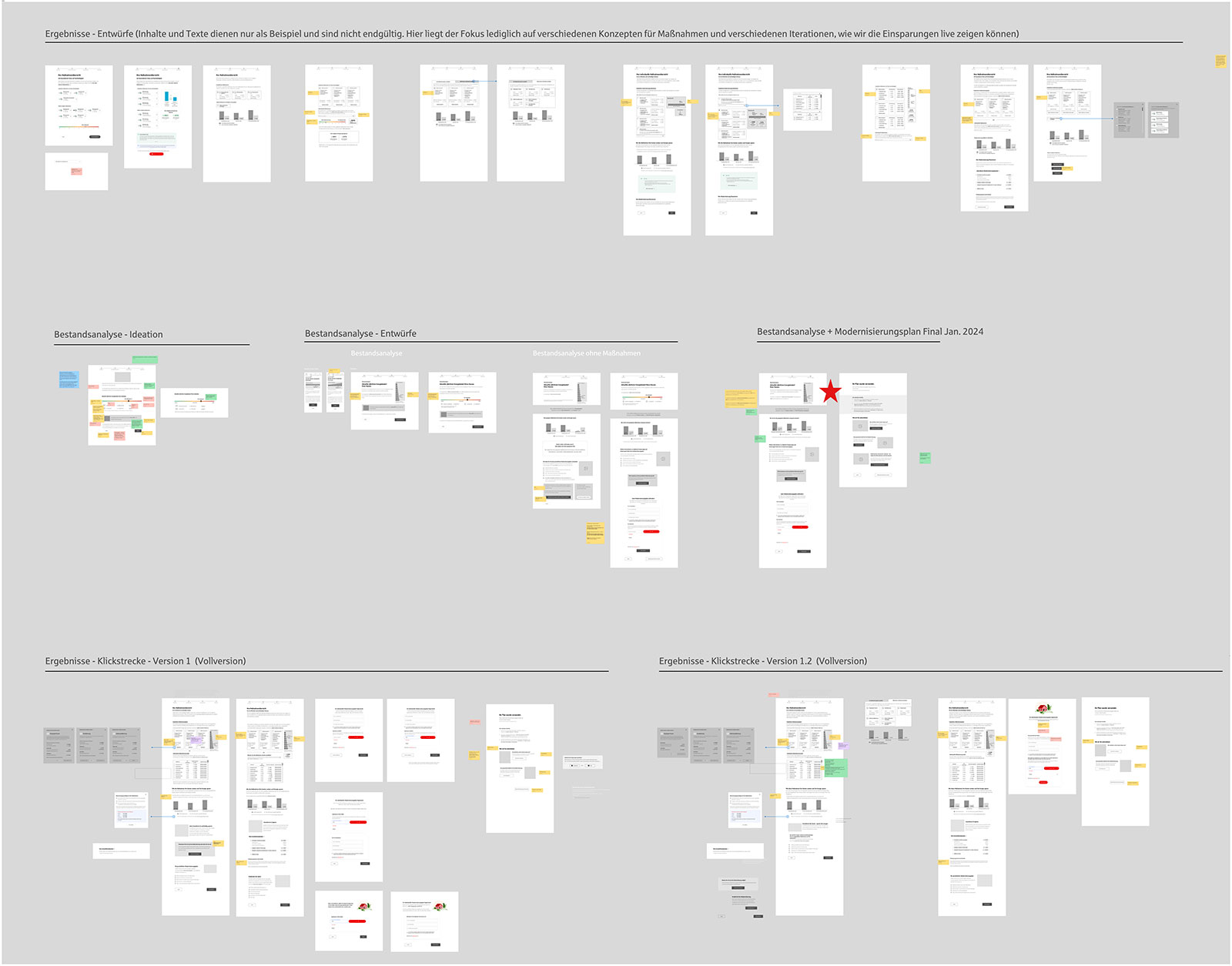
Ideation & Prototyping
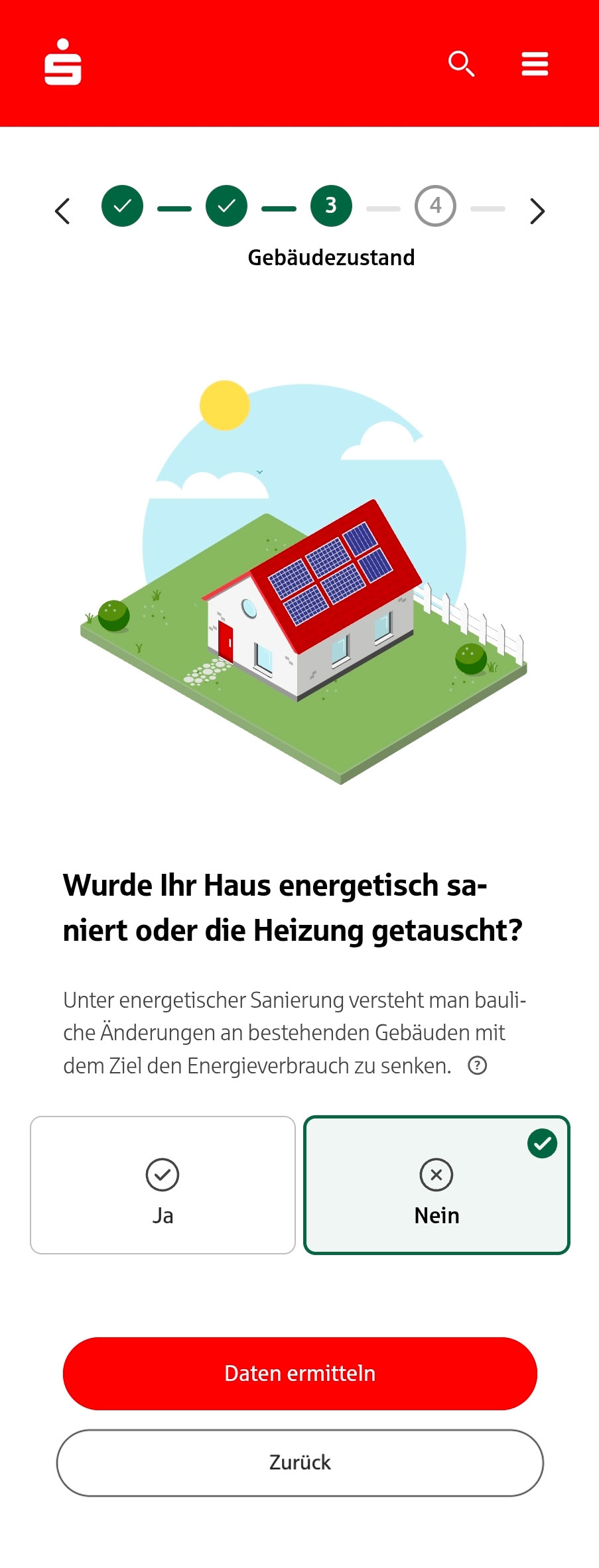
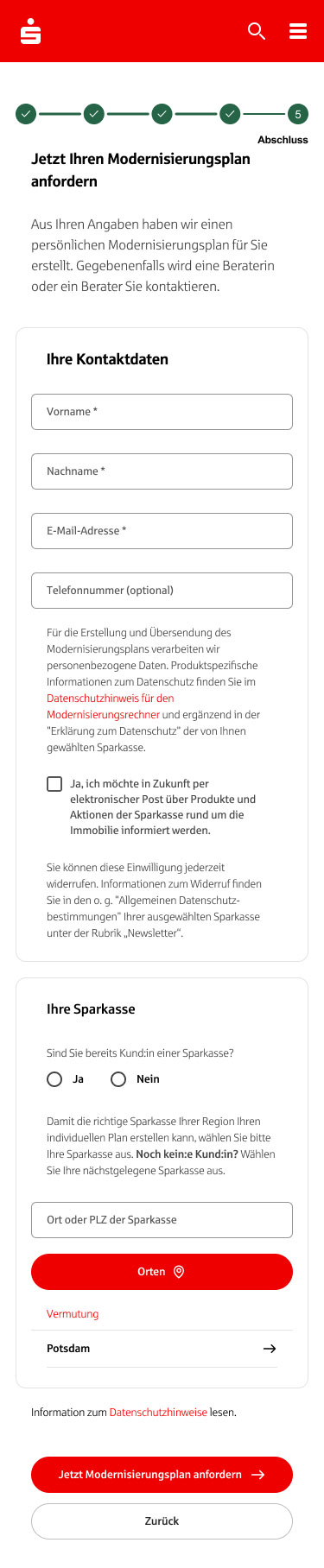
Using the final user flow as a blueprint, I started exploring ideas and translating complex information into clear and understandable copy and designs. I then defined interaction patterns, error states, and accessibility and legal requirements. For the final high-fidelity prototype, I added detailed annotations for developers, covering interactions, edge cases, and tracking needs.
Test
To validate our designs we conducted a moderated usability test.
- Qualitative Initial Survey
- Usability Testing
- Task Completion
- Questionnaires
Based on user feedback and after several feedback rounds with the team, energy experts, and Dev–UX alignment meetings, we finalized the design and prepared it for implementation.
- Created final high-fidelity UI designs
- Wrote detailed Dev notes and specifications
- Added edge cases and error states
- Ensured accessibility compliance and consistent UX across screens
- Deliverables: product page, renovation tool, renovation plan, e-mails
Final Designs
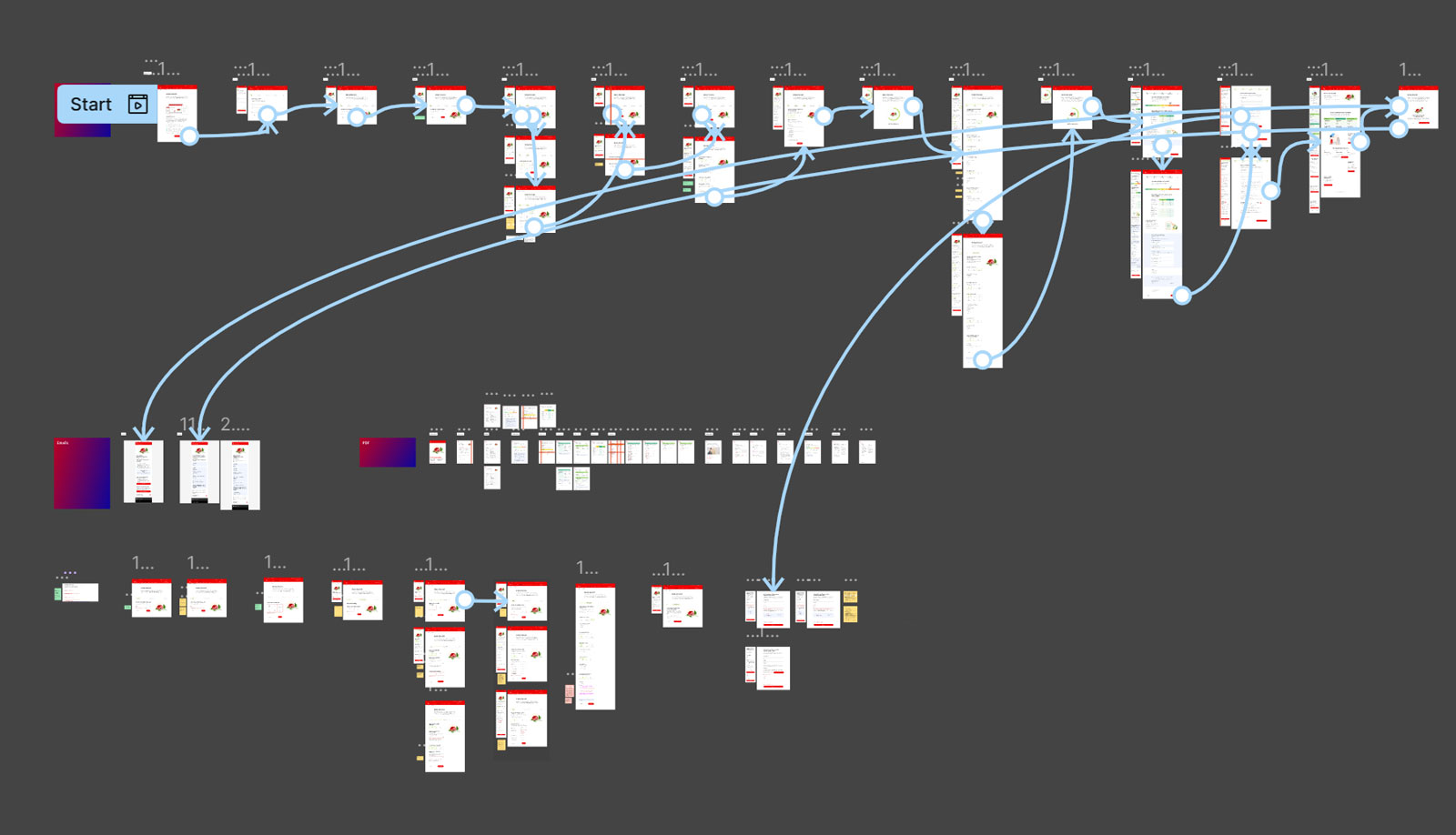
Interaction Demo
Key Screens
Scroll to explore each screen


Key Takeaways
This complex project, with a team of more than 60 people, taught me that clear communication is essential to building a successful product. Aligning different perspectives was one of the main challenges throughout the process. Through workshops, iterative collaboration and multiple user testing methods, we developed solutions that balanced business goals with user needs and I helped align stakeholders to the most effective approach.
In the MVP, we broke down complex topics into clear, easy-to-follow steps. We are currently developing new features to make the results more accurate.